A Hands-on Approach to Teletherapy
As a teacher and a therapist, Rebecca (Becky) Cobb ’05 had to adapt quickly during the pandemic. The clinical professor at Seattle University and couples and family therapist moved her work online, wondering, “How do I do therapy virtually and engage children, adolescents and students?”
Becky already followed a flipped-classroom format, requiring students to do substantial preparation in advance to leave time for roleplaying and other experiential activities in class. So she focused on how to involve students in meaningful Zoom conversations. But replicating experiential activities she used in roleplaying during therapy proved more challenging. She decided to send her students care packages full of supplies for virtual, experiential roleplaying, such as crayons, yarn, glue sticks and paper bags to make hand puppets. That allowed her to combine online sessions with hands-on activities.
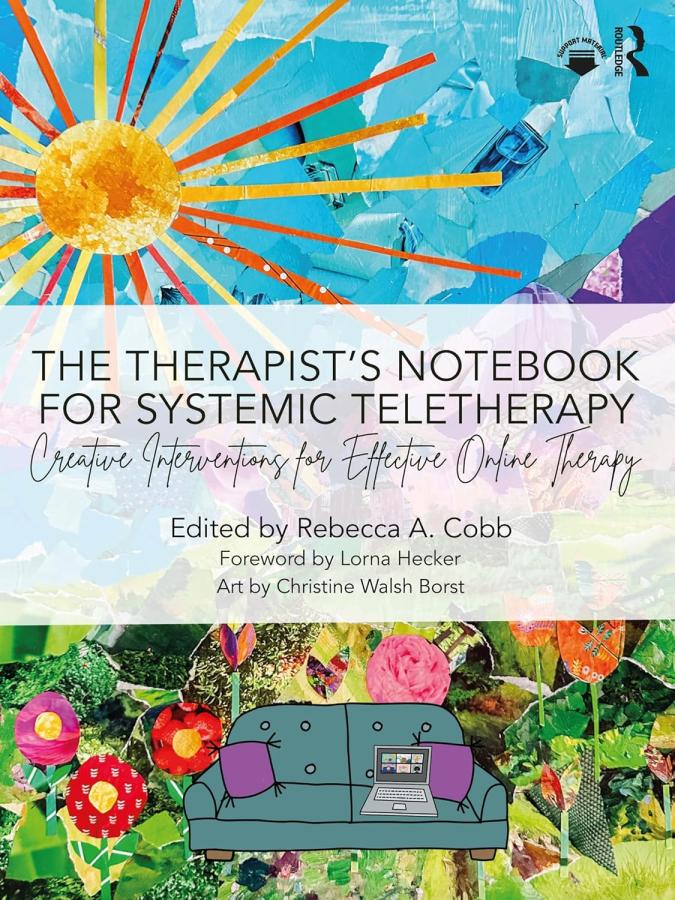
This innovation proved successful, and Becky has embraced teletherapy. She describes her novel approach in “The Therapist’s Notebook for Systemic Teletherapy: Creative Interventions for Effective Online Therapy,” a volume in the Routledge Therapist’s Notebook series. Her mentor at Purdue suggested that Becky edit the volume. The first book addresses working with individuals, couples and families, and the second, due in January, covers teletherapy for children and adolescents. A friend designed colorful covers to represent her creative approach.
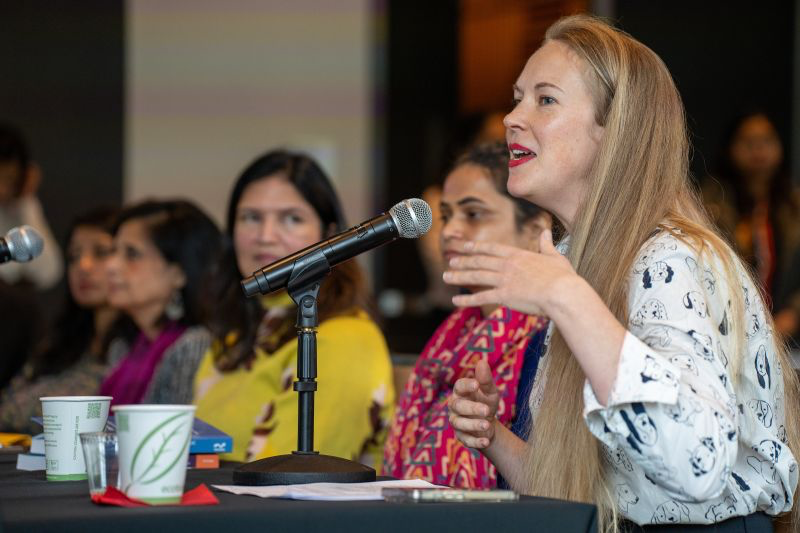
Becky has discussed her work on the American Association for Marriage and Family Therapy podcast and at the annual conference of the Washington Association for Marriage and Family Therapy, where she won the 2024 Professional Presentation award. She has also spoken about this work at the National Council on Family Relations annual conference as well as other professional venues. The chair of the Telehealth and Technology
Topical Interest Network for the American Association for Marriage and Family Therapy, she also served as president of the Washington state chapter.
With Jacob Priest, a colleague at the University of Iowa, Becky edited the third edition of “Introduction to Marriage and Family Therapy,” taking over for former Purdue professors who edited the first two editions.
Becky majored in psychology, earning a Bachelor of Science degree. “I loved Westmont,” she says. “My best friends are people I went to school with. I worked in the psychology department lab, served as a teaching assistant, coordinated animal care and became a part-time administrative secretary before holding that job full time for a year. I got to know the professors well and keep in touch with them.”
At Purdue, she completed a Master of Science in child development and family studies, specializing in marriage and family therapy, earned a doctorate at Florida State and became certified as a licensed marriage and family therapist in Washington.
When Becky met her husband, Adam Weiler, at a surf and yoga retreat in Costa Rica, they discovered they’d grown up 20 minutes from each other in Southern California and had mutual friends. He owns a marketing company in Seattle, where he moved when they got married.
“I was terrified of public speaking, so I never thought about teaching,” she says. “But I received a small stipend at Purdue to teach a psychology class, and professors Tom Fikes and Brenda Smith helped me and gave me sample textbooks. I taught throughout graduate school and enjoyed it as much as researching and clinical work.”
Becky describes her two children, 5 and 3, as “the small humans who keep attempting to make me a morning person.” Her nine-month contract allows her to spend summers with her family. “The kids are a priority, but my job is also important,” she says. “I’ve learned to prioritize and have become more productive.” She now focuses on supervising people getting lic-ensed and mentoring those becoming supervisors, which she can do from home. She’s particularly proud to be a kindergarten room parent.