Bridging the Bike Lane: Students Identify Shared Values About E-Bike Safety
When six blocks of State Street closed to vehicle traffic in 2020, downtown Santa Barbara underwent a radical transformation. As salt air filled the once-busy thoroughfare, so did the whir of electric motors. E-bike usage has risen steadily, bringing a surge in accidents that has alarmed residents, parents and local politicians.
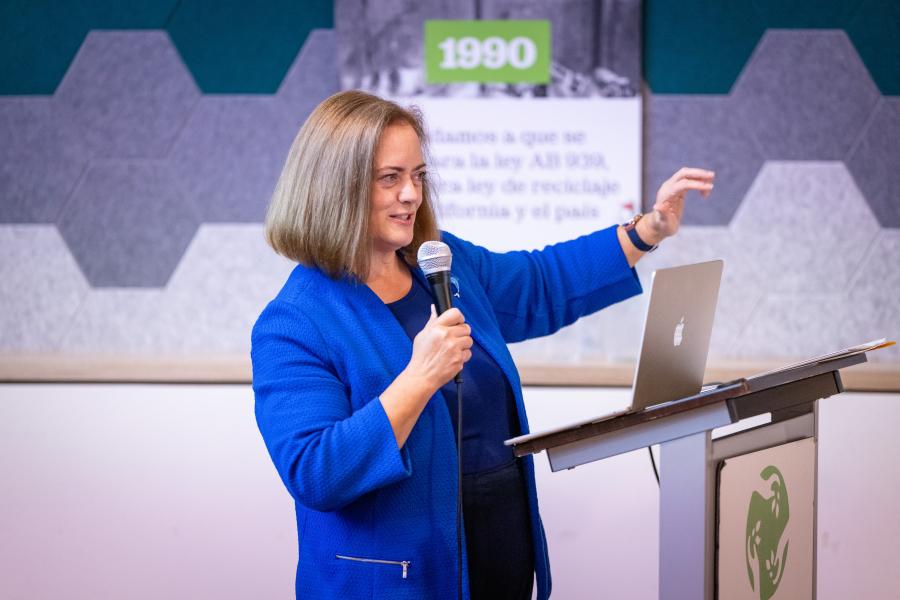
To address this thorny issue, the Westmont Center for Dialogue and Deliberation (WCDD) stepped into the fray in October. Hosting a roundtable at the Community Environmental Council’s Environmental Hub, Westmont students stood at the center of a high-stakes conversation, facilitating a discussion among more than 50 community members, including Mayor Randy Rowse and local law enforcement.
The event focused on a core tenet of WCDD’s mission: identifying shared values. Setting aside policy debates momentarily, participants addressed a deeper question: What hopes for Santa Barbara do we all share?
Sobering local statistics highlighted the stakes. E-bike collisions in the city jumped from just 10 in 2022 to 107 in 2024. Cottage Hospital reported that between 2023 and 2024, nearly half of the 84 patients treated for e-bike injuries ranged in age from 11 to 20.
Throughout the evening, participants attempted to balance the competing needs for safety, freedom and sustainability. While Professor Deborah Dunn younger riders, many not yet old enough to drive, emphasized the independence e-bikes provide, others focused on the environmental benefits of their smaller carbon footprint. However, safety concerns dominated, particularly regarding younger riders unfamiliar with the rules of the road.
Student facilitator Taylor Gray ’26 observed the power of the deliberative process firsthand. “Everyone came to the discussion with different perspectives and priorities,” she said. “By the end, everyone had shifted slightly and found common ground. They left with more nuance to their views and considered aspects of the issue they’d never considered before. I thought that was cool and inspiring.”
The student volunteers came from the Facilitating Ethical Communication class with Deborah Dunn, professor of communication studies and director of the WCDD. Since its inception in 2018, the center has sought to model how Christian liberal arts students can serve as peacemakers in a polarized world.
Madison Rhodes ’28, who served as a notetaker, reflected on the efficiency of local engagement. “When people directly affected by a topic meet with others experiencing the same thing, their hearts are much more likely to soften toward the other,” she said. “This allows participants to engage in civil conversations, something much more difficult to accomplish on a national or global level lacking the personal stake.”
While the group explored practical solutions, ranging from increased police enforcement of the 2025 ordinance prohibiting unsafe use of bicycles and e-bikes to the creation of paths just for bicycles and e-bikes, the true success emerged from the social fabric.
“Everyone left the event feeling two steps closer to their neighbor,” said student chart writer Cameron Ashford ’27. “I believe this makes everything worth it.”
As Santa Barbara continues to navigate the evolving landscape of its downtown, Westmont students demonstrate that the most important path forward involves a conversation built on mutual respect and shared hope for the community, not just a bike lane.