A Community Approach to Aging
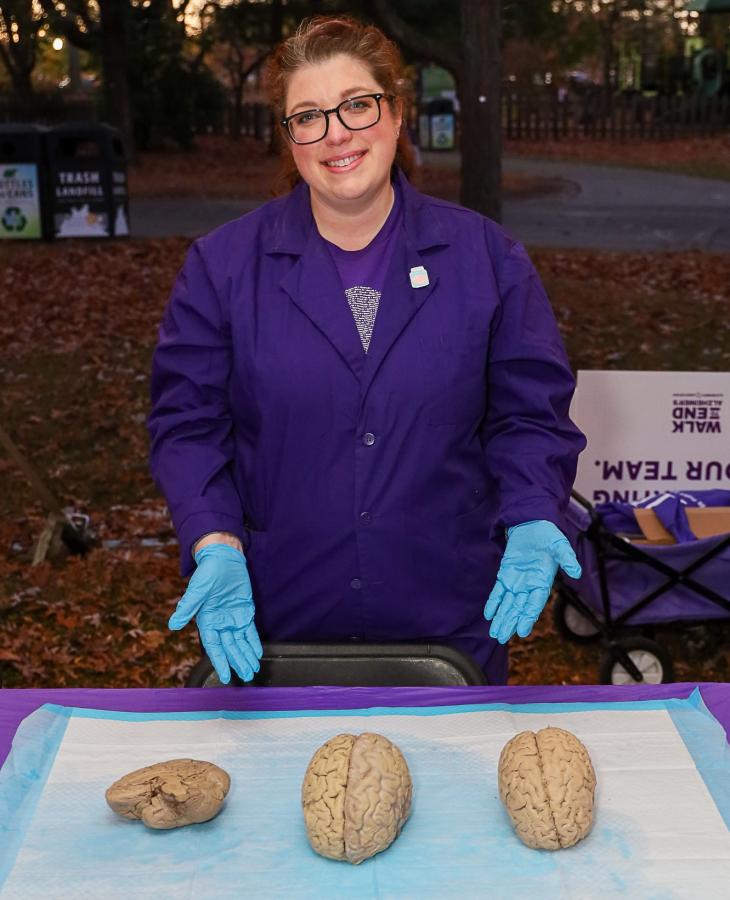
Curiosity drives Ana Daugherty ’07, a cognitive neuroscientist studying aging, Alzheimer’s disease and related dementia. “When I don’t understand something, I’m determined to push boundaries and question assumptions to learn more,” she says. “And I want to communicate what I discover so people can benefit from the knowledge."
A professor of psychology, Ana directs the Institute of Gerontology at Wayne State University and pursues interdisciplinary research with a liberal arts approach. “I work from different disciplines with different questions and approaches to get multiple perspectives in addressing aging,” she says.
She fell in love with the liberal arts at Westmont, where curiosity about the brain led her to major in neuroscience. “I’ve never left the liberal arts approach and recreate it wherever I go,” she says. “It’s the key to making headway in some of the final research steps, taking science from the lab to the community to educate people. I work closely with community partners, who help us all the way through. I feel responsibility as a scientist to share information that empowers the community, addressing fears about aging and informing the public.”
She earned a master’s and a doctorate in psychology (cognitive neuroscience) at Wayne State University and did postdoctoral work at the Beckman Institute for Advanced Science and Technology, University of Illinois Urbana-Champaign.
After decades of studies, scientists better understand typical aging as opposed to disease in aging. “When we measure how people age differently, 30 percent of the disparity depends on genetics, but 70 percent arises from lifestyle and environment, and we can control that,” Ana says.
Alzheimer’s represents one form of dementia with signifi cant cognitive changes. Another, vascular dementia, relates to heart disease, hypertension and diabetes. High blood pressure accelerates brain aging and may lead to dementia. “I want to see early detection and prevention to set people up for the best outcomes,” Ana says. “Identifying the most relevant responses means we can start managing them. Someone with high blood pressure can take medication, watch their diet and exercise. Heart health is brain health.”
In her Healthy Brain Aging Laboratory, she studies individual differences in aging to discover both risks and protective factors to reduce disparities in cognitive health. She recommends five protective measures.
- Regular physical activity, being active for 30 minutes a day.
- Sitting less, taking the stairs, walking around the block,
walking at the mall. - Active cognitive engagement, such as watching a movie
and talking about it, knitting, learning new skills. - Social engagement, connecting to the community, being
mindful at church, participating in a group. - Three feasible things to do every day: Take a few more
steps, lean into your interests and connect with someone.
In addition, Ana directs the Detroit Aging Brain Study, which has examined changes in the brain during a healthy adult lifespan for more than 22 years. Her work covers nearly the entire adult lifespan, from age 18 to 90. Ana works primarily with graduate students, who assist her in her research. “It’s an overwhelming and positive feeling training a new generation of scholars,” she says.
At Westmont, Ana learned respect for the individual, and she fights against the ageist bias that minimizes older people. “It’s important to empower them to be part of the process of studying aging,” she says. “Memory issues are deeply important to the individual and, by extension, to the community.
“I got lucky when I chose a place like Westmont, where I took a lot more units than I needed, such as extra classes in English and studio art. I still paint in watercolors and did a show of my work in between defending my dissertation and completing my doctorate.”