Environmentalist Shares Career Journey

William Morris, a faith-based climate activist, shared his journey of growing up near an oil refinery in Torrance to his current work in environmental justice. The lecture was the first of a new series about careers in environmental studies hosted by Sustainable Westmont and stemming from the college’s new environmental studies major.
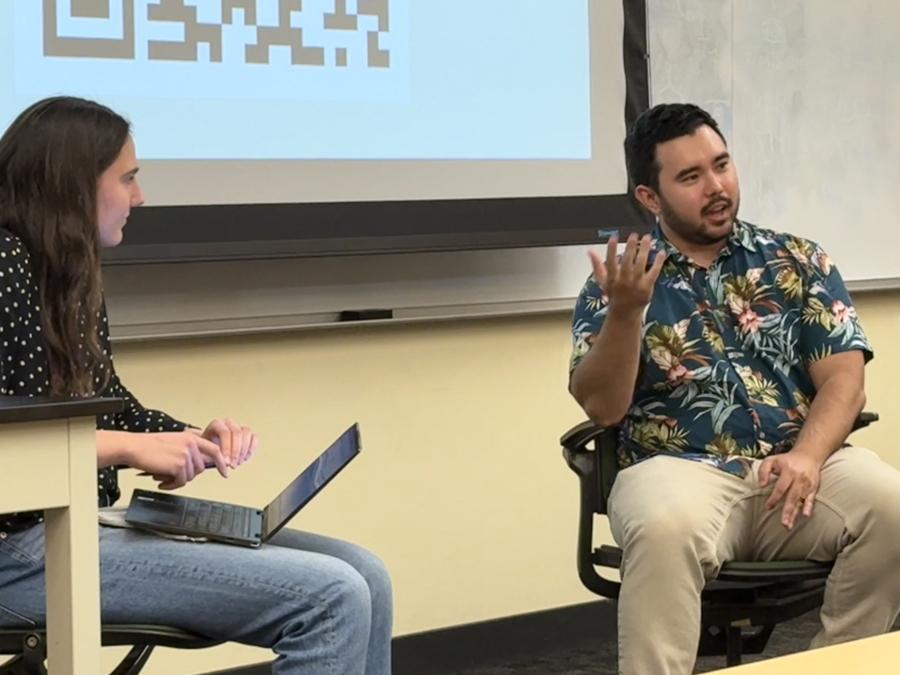
Morris’ love of nature and creation began on family trips to state and national parks in California. “It instilled a sense of wonder and awe at what I was seeing,” he said. “I grew up going to church, but oftentimes I feel like creation is where I experience God's presence the most.”
In between trips, he’d often watch PBS shows such as “Nature” and “Nova” to learn more about nature and science. He also learned about nearby homes that were being damaged because of methane building up underground that would eventually explode and cause the floors to break apart.
“I got interested in the climate and environmental issues not just because of the science, but because sometimes the justice aspect gets ignored,” he said. “We talk about bringing down emissions or how many degrees the Earth has warmed, but this is what it means to the people who live around it. It means poisoned air, water and land with children growing up surrounded by toxins.”
Morris, who graduated from Humboldt State University, has held a number of freelance environmental jobs and serves as a fulltime faith organizer for Greenpeace. He emphasized the importance of faith-based climate action, citing his work in Kenya, Chad and Indonesia, as well as his role in advocating for fossil fuel divestment within the United Methodist Church.
“There were young people in the denomination who said investing in the fossil fuel industry didn’t line up with their faith and values,” he said. “If we say we care about creation and our neighbor, why are we putting church money into investing in those things.”
He also discussed various career paths in environmental studies, including policy work, media and interfaith organizing.
Organizer Christine Seibert, assistant director of environmental studies, pointed out there’s a wide variety of courses in the major. “This is an interdisciplinary field, which means you can go into a lot of different careers with a degree in environmental studies,” she said. “The purpose of this series is to highlight people in different environmental careers so you can see how they got there, how they found an internship and how they made the tough decision between taking a job or going to grad school.”