The Next RenAIssance: Kass Brings AI Optimism Back Home

The rapidly accelerating world of artificial intelligence often fuels a modern culture of anxiety, but Santa Barbara tech executive and author Zack Kass believes humanity stands on the precipice of its greatest era yet. The audience of about 300 people reacted to his lively talk with applause on several occasions and gave him a standing ovation at the end.
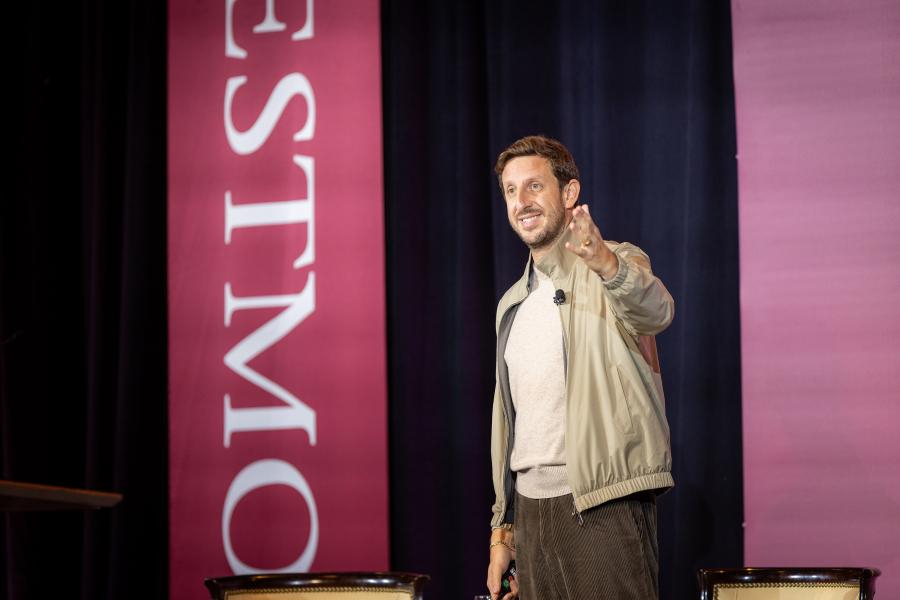
Kass, former head of Go-To-Market at OpenAI and author of “The Next RenAIssance,” served as a keynote speaker at Westmont’s LEAD Where You Stand conference June 4-5 at the Hilton Santa Barbara Beachfront Resort.
“Leadership, Human Flourishing and Artificial Intelligence” brought together a distinguished lineup of global thought leaders, bestselling authors and researchers to equip executives, educators and organizational leaders to navigate a rapidly shifting technological and cultural landscape.
Kass said navigating that landscape requires a fundamental shift from fear to historical perspective. He detailed the rapid evolution of AI, tracing the lineage of modern technology from early statistical machine learning to the foundational neural networks that define contemporary computing.
“We went from building machines that could barely measure sentiment in a tweet to building machines that could conduct multi-step, multi-environment, novel scientific research in six years,” he said. “If you’re impressed, guess what? So are the researchers.”
Google researchers published a reinforcement learning paper and the last sentence read: “Above all else, we attribute our success to divine benevolence.”
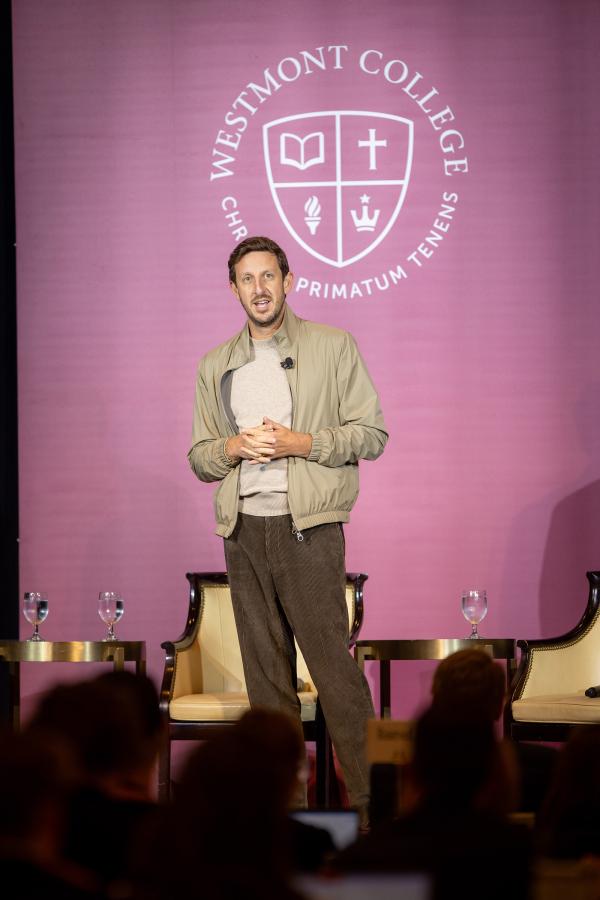
“Even the researchers are like, yeah, God’s good,” Kass said. “That’s how much humility it requires to stare at this and not assume there is some guiding light.”
While maintaining a staunchly optimistic outlook, Kass did not shy away from the real-world responsibilities and challenges that accompany the AI revolution. He stressed the urgent need to address widespread screen and device addiction, particularly among younger generations.
“The screen is causing damage to our brains that we still don’t yet understand,” Kass said. “The screen is a demon, and the more that we normalize that discussion, the healthier we’re going to build technology, and the better the world we’re going to live in.”
He stressed the importance of addressing device addiction, noting that Gen Z appears to be the first generation to not be materially smarter than the last, and more likely to be depressed, anxious, reclusive and isolated than any generation prior. “We probably should stop pretending we don’t know the culprit,” he said. “We never should have given kids smartphones, and maybe no one should have social media. Now, we have to recognize we’ve made a mistake, which we’re starting to do.”
Despite the disruptive nature of these tools, Kass rejected the prevailing dystopian narratives that frequently dominate public discourse. Instead, he argued passionately that AI is actively making the world both economically and spiritually better by systematically reducing human suffering and expanding the boundaries of human potential.
“I cannot emotionally convince people of the fact that the world is getting better all the time,” Kass said, attributing the widespread cultural pessimism to a media landscape that prioritizes bad news over monumental human progress. “The reason for this simply is that you are overexposed to negative information and you are under exposed to positive information.”
After urging the audience to focus on progress rather than panic, he pointed toward macro-level responsibilities, calling for sweeping policy reforms across critical sectors including housing, healthcare and education. “It doesn't matter what the future of work looks like,” he said. “You can engineer the perfect jobs till kingdom come, but if the kids have to work until they’re 90 to afford their parents’ house, what difference does it make?
“We have a moment in time to right the wrongs, to reset our relationship with technology as a deflationary tool and we should talk about it nonstop and put unrelenting pressure on every policy maker to make it so.”
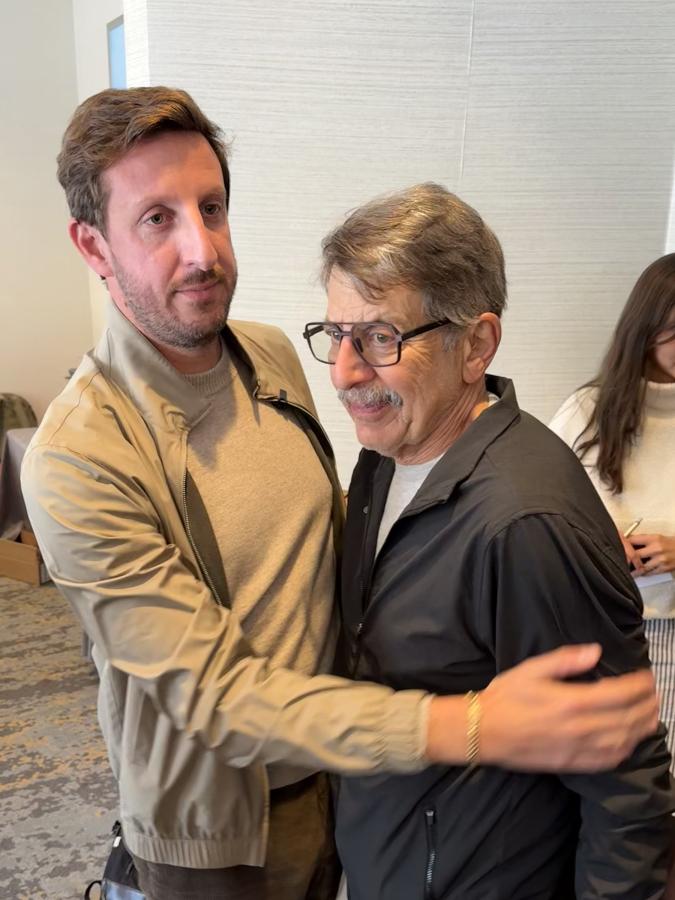
The conference marked an emotional homecoming for the tech leader. Zack, a San Marcos High School graduate who played volleyball at UC Berkeley, is the son of retired Dr. Fred Kass, the 2024 Santa Barbara County Physician of the Year and former director of wellness at the Ridley-Tree Cancer Center, where he served for more than three decades.
Reflecting his father’s long legacy of community-minded service, Zack concluded his keynote with a direct charge to the next generation of leaders. He argued that as technical skills become increasingly commoditized by automation, the uniquely human elements of organizational direction will matter more than ever before.
“We're moving toward a world where the best among us will be measured by our curiosity, empathy, wisdom, courage, humility and our morality,” he said.
He urged individuals, executives and educators to anchor themselves heavily in their core mission, vision and values. By doubling down on these intrinsic human qualities, he noted, society can successfully wield artificial intelligence as a collaborative tool to build a brighter, more flourishing future.
His best advice to a prospective college student is to study something they love, but not to make their passion their job. “Make a passion so that you can discover something we never teach you in high school, which is mastery,” he said. “Explore an idea with vigor, not because it’s going to make you a good job or get you a good grade, but because the act of exploring that idea is intrinsically motivating, and, if you graduate, you have the ability to acquire more. The ability to acquire skills is, in fact, one of the great defining characteristics of the next great generation.”
Kass encouraged the listeners to go back to their dining room tables, communities, places of worship and companies and have conversations about the world we’re building, and the power to say, “I can make a difference. I get to decide how this world takes shape.
“Optimism is not naive. If I can be a source of it for you today, that’s awesome, but remember what it feels like to be a source of it for someone else tomorrow.”
The conference returns June 3-4, 2027, with another stellar lineup of inspirational speakers in Santa Barbara.