In the Footsteps of Ansel Adams: From Manzanar to Petroglyphs — A Journey Through History

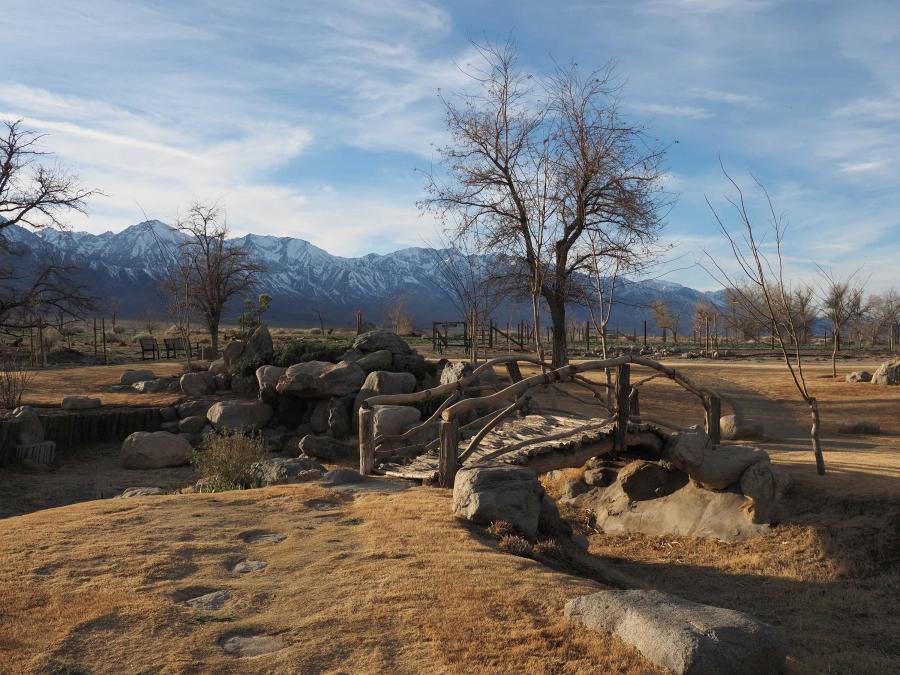
Members and supporters of the Westmont Ridley-Tree Museum of Art experienced California’s Owens Valley and the Sierra Nevada on a unique trip Feb. 27-28 with stops at Manzanar National Historic Site, the Paiute Shoshone Cultural Center and nearby ancient petroglyphs. The group followed in the footsteps of Ansel Adams, visiting locations important to him, including Lone Pine and Manzanar, where he photographed Japanese Americans incarcerated there and the community they formed within the desolate landscape.
The museum’s current exhibition, “Beyond the Wilderness: Ansel Adams in 1940s Los Angeles,” is on view through March 28.
Alumnus Paul Mori ’77, a descendant of Japanese Americans incarcerated during World War II, shared stories about his family, which brought Manzanar to life, a place now vacant, quiet and serene.
“Touring the site of recreated barracks, the guard gates, cemetery and the excavation of the largest Japanese garden was fascinating for everyone,” Mori said. “By telling family stories, I helped make history come alive. It became a real experience for folks.”
“Manzanar has been significantly affected by this administration’s cuts in funding and desire to conceal parts of American history that are less than admirable,” said Chris Rupp, interim director of the Ridley-Tree Museum. “Experiencing Manzanar and having the opportunity to understand what happened there and why is the best way to prevent future reoccurrences of mistakes like this.”
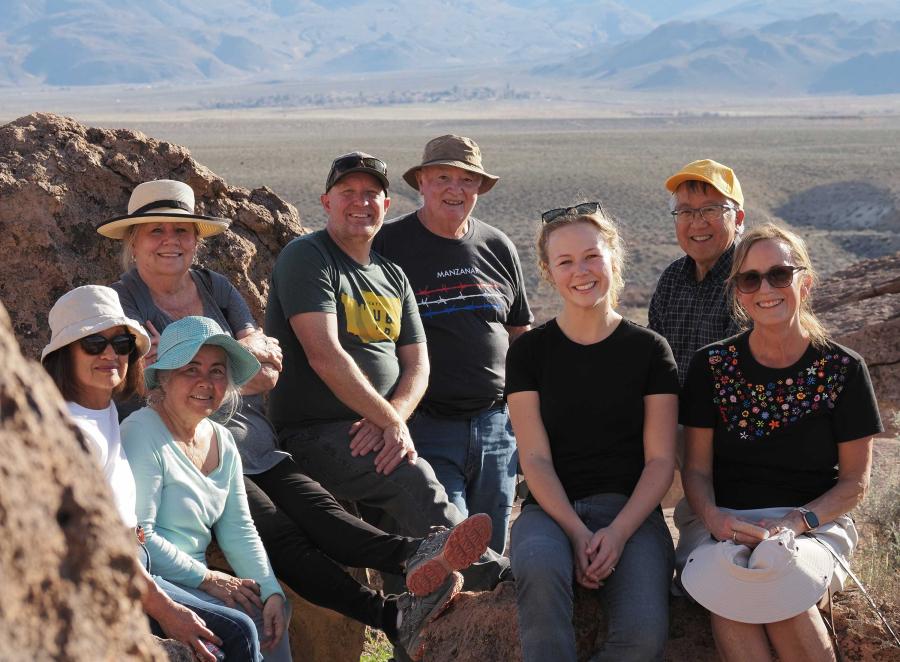
At the cultural center in Bishop, the group learned about the original inhabitants of the land, as well as the history and culture of the Paiute and Shoshone people. “There are parallels between the injustice of the Japanese Americans who were forced to live on the land and the native Paiute-Shoshone people, who had land taken from them,” Rupp said.
The Paiute-Shoshone in the Owens Valley gradually lost their ancestral lands through a combination of broken promises, coercive water deals and federal actions that prioritized Los Angeles's growth rather than indigenous sovereignty. “My message to group was that the tribe has a rich and vibrant culture with much to be admired and respected,” Rupp said.
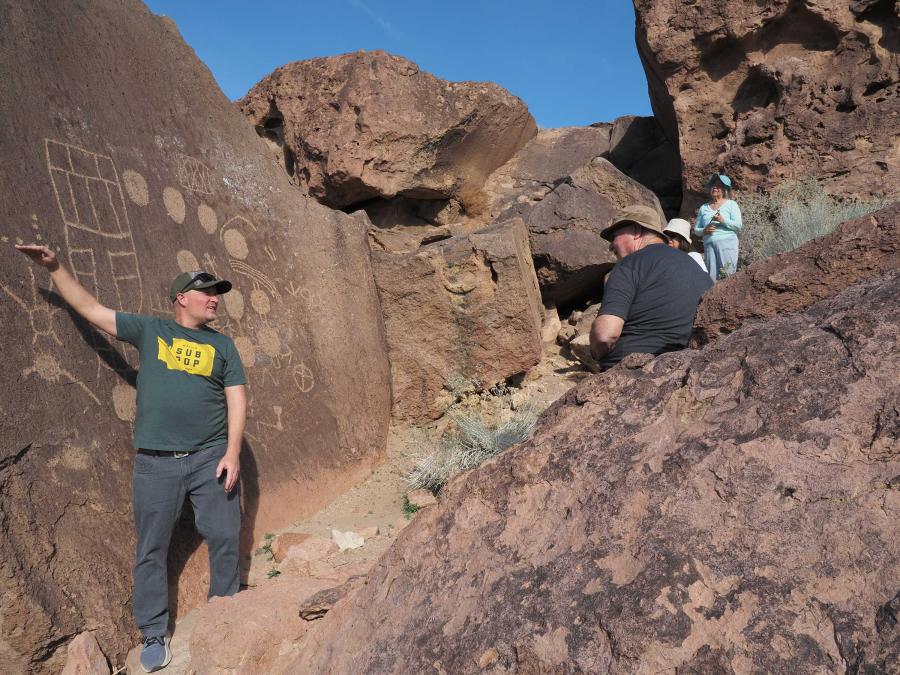
Because petroglyph sites are generally considered culturally sacred spaces, Rupp asked the group to respect the place, not to touch the carvings, and not share the locations so they can be preserved and admired by future generations. He explained the differences between pictographs and petroglyphs, how researchers determine the age of these carvings, and some of what we know about the representations depicted and their purpose.