Faith.Climate.Action. Empowering Christian Colleges to Lead Climate Action

A multi-year initiative launched at Westmont College grew into a vibrant climate advocacy network across Christian higher education. Faith.Climate.Action., a program funded jointly by Westmont and The Arthur Vining Davis Foundations, concluded its three-year run following a national retreat this summer on the college’s leafy Santa Barbara campus.
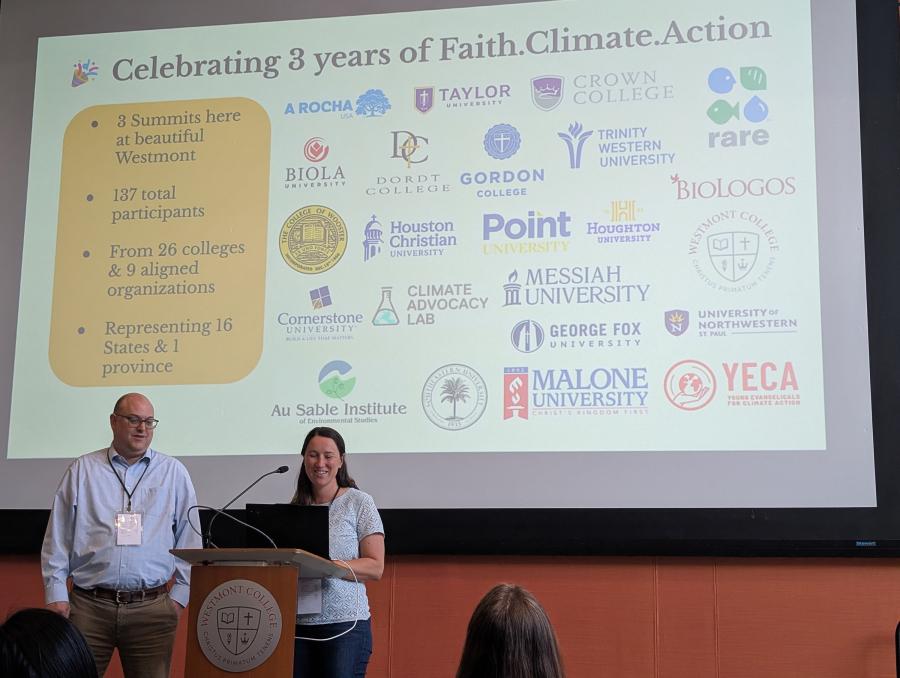
Across three summits, 137 participants from 26 colleges and nine aligned organizations joined the effort, and attendees represented 16 U.S. states and one Canadian province. Under the leadership of Amanda Sparkman, Westmont professor of biology and director of environmental studies, and Christine Seibert, Westmont assistant director of environmental studies, the network equips campus leaders to launch impactful climate projects. These campus programs cut food waste, build bike-share options, establish compost systems and educate local communities.
“While upwards of 60% of young evangelicals recognize the reality of our changing climate, the desire to advocate for creation care can often feel like a solitary journey,” says Josh Low, who leads the Yale Program on Climate Change Communication. “There is a growing community of Christians working to change that.”
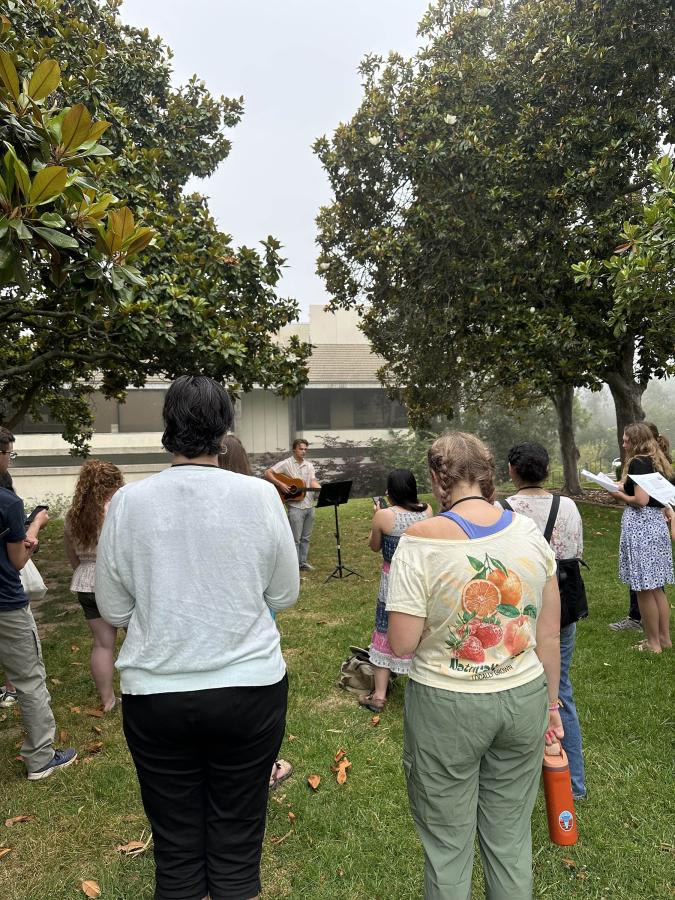
Low, who trained and coached participants on project strategy alongside consultant Carina Barnett-Loro, praised the momentum from the 2026 retreat at Westmont.
“I feel more hopeful than ever that this movement turns curiosity about climate into collective, high-impact action,” Low said. “These young people and faculty reach out to their communities, share their stories and testimonies, and move people to act — often guiding individuals toward their first climate action.”
Through interdisciplinary study, spiritual practices and advocacy skills, Faith.Climate.Action. provides concrete communication tools to student and faculty leaders. Participants learn directly from experts at the Climate Advocacy Lab, Rare, and Young Evangelicals for Climate Action.
“My experience helped me meet other Christians in creation care,” says Justin Burdine, a biology professor at Cornerstone University. “It encouraged me to integrate these themes into my courses and our entire curriculum. Many of our students now attend graduate school, work for non-profits and accomplish great work because of this retreat.”
Hanna De La Vega, a Cornerstone University alumna originally from Mexico City, has seen how environmental challenges such as pollution, waste, water issues and climate change affect communities in different ways. “Truthfully, it has been really hard to make relationships and find community around faith and environmental-minded people,” De La Vega said. “Now I call them dear friends. It’s an opportunity for us to share, build community and support one another.”
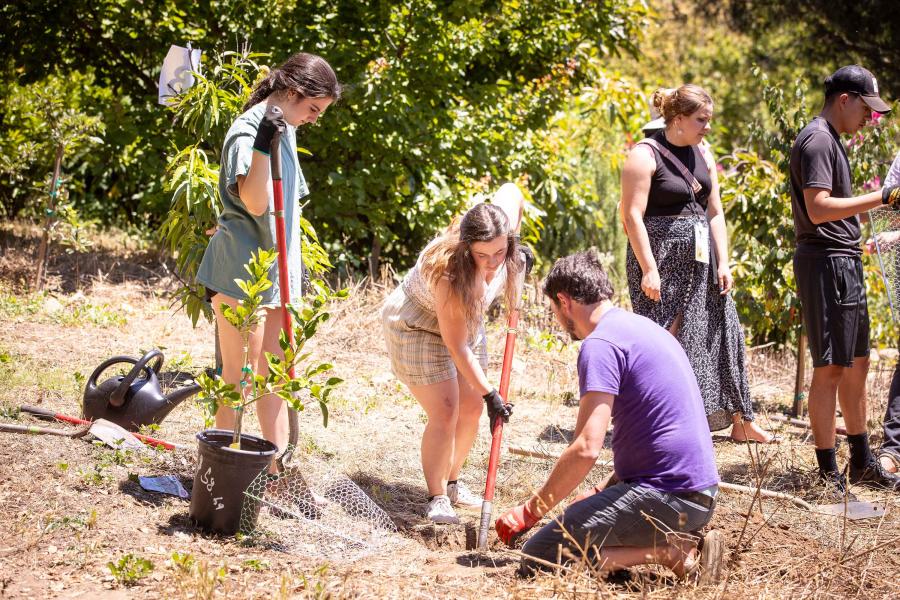
Participants continue to transform campus culture and drive climate-positive projects that integrate theological commitments with behavioral science. Students tackle cafeteria waste through systematic food collection and soil enrichment programs. Campus teams construct native drought-tolerant prayer spaces that merge spiritual reflection with water conservation. Colleges launch community bike fleets to provide zero-emission transportation across campus grounds. Faculty host interactive forums that examine scientific data alongside biblical stewardship to address campus skepticism. Finally, volunteers restore local canopy habitats by planting native trees and removing invasive plants.
“Together, these projects cultivate collaborative change and vocational purpose among students and faculty, institutionalizing sustainable practices while advancing climate care through shared values and courageous storytelling,” Sparkman says.