Westmont Downtown Lectures:
Spring 2026:
Ecologist Shares Climate-Smart Planting Strategies
Westmont ecologist Laura Drake Schultheis shares her research about plant flammability and defensible spaces in the face of climate change in a Westmont Downtown Lecture, “Rooted in Resilience: Adaptive Planting Strategies in Wildland-Urban Interfaces,” on March 11.
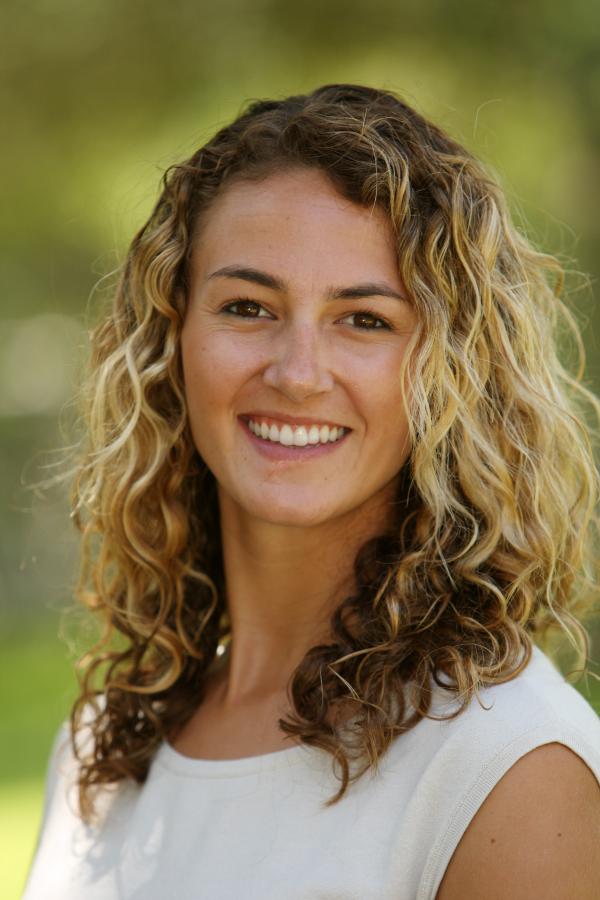
“I will share examples of native plant restoration and efforts to improve community defensibility in fire-prone areas like Santa Barbara,” she says. “I hope people are encouraged by the conversation and empowered to get involved in the work being done to restore our native ecosystems and reduce fire risk in our own communities.”
Schultheis, a Westmont alumna who earned a master’s degree in ecology and a doctorate in plant ecology from UC Santa Barbara, has played an integral role in the restoration of a fire-resilient oak woodland west of Westmont’s campus. She and her students have planted about 60 native coast live oaks where Montecito Fire removed dead and dying eucalyptus trees in the summer of 2023.
“While no plant serves as a complete barrier to fire, there is some evidence that healthy, mature oak canopies can slow the spread of fire compared to non-native species like eucalyptus,” says Schultheis, a Westmont assistant professor of biology.
Last summer, she and student Isabella Garcia ’25 presented a paper, “Purposeful Planting: Characterizing Plant Flammability Using Functional Traits for Defensible Space,” at the Ecological Society of America Annual Meeting, one of the largest ecology conferences in the nation.
Other research has analyzed the structural and functional traits that contribute to the flammability of 20 Santa Barbara native plant species. This summer she and a team of Westmont undergraduates will expand on this work through a collaboration with researchers at UC Santa Barbara.
Schultheis has also published a paper on the effects of drought and opportunistic fungi on big berry manzanita shrubs.
Advancements with AI
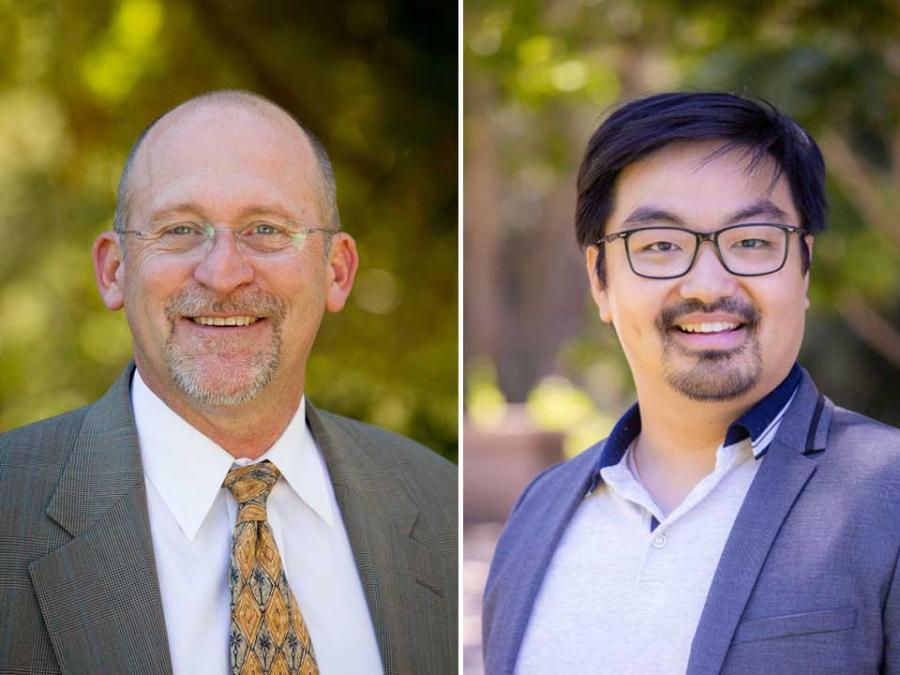
A Westmont Downtown Lecture, “AI and Our Shared Future: Opportunities, Challenges and What’s at Stake," explores AI's real-world implications. The talk features Mike Ryu, Westmont assistant professor of mathematics and computer science, and Reed Sheard, Westmont vice president of advancement and chief information officer.
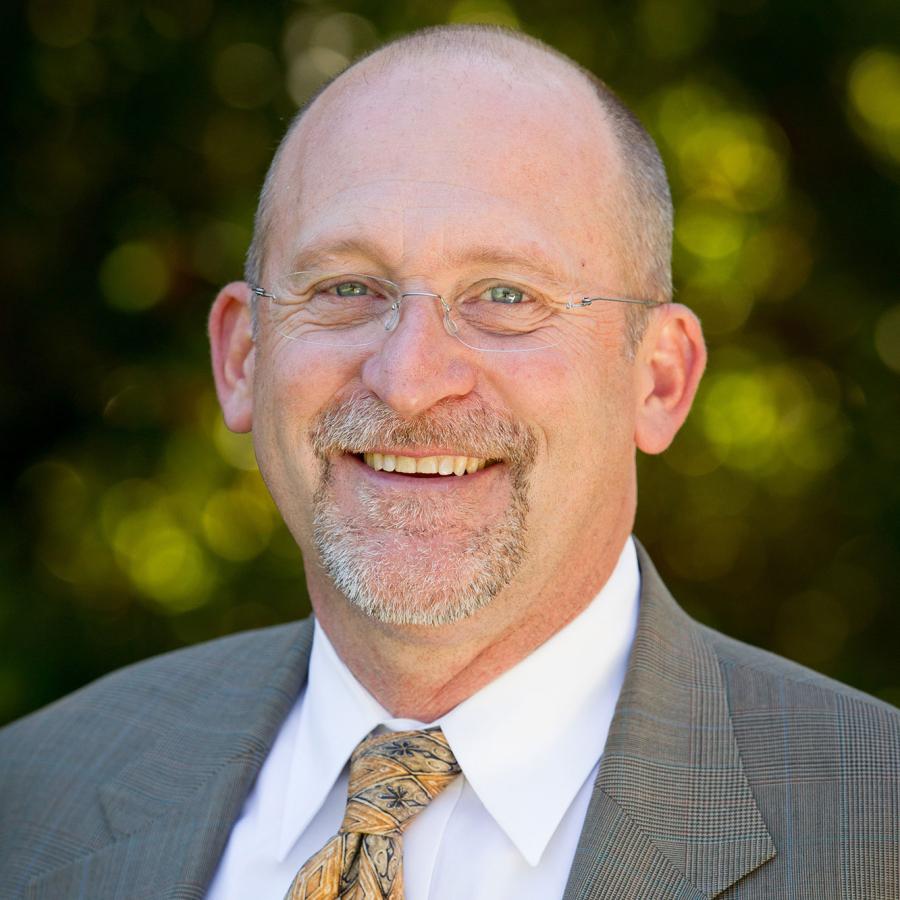
"I’ll open with a brief introduction to AI and then examine how technologies grow exponentially," Ryu says. “I’ll break down how much of the information surrounding AI is real and what is likely hype.”
“I’ll explore how artificial intelligence is reshaping society, education and our daily lives— not just as a tool, but as a force that’s challenging us to rethink what it means to be human,” Sheard says.
Ryu earned both a bachelor’s degree in software engineering and a master’s degree in computer science at Cal Poly San Luis Obispo. He worked in the software industry in the San Francisco Bay Area as a software engineer, an agile coach and an engineering manager before coming to Westmont in 2023. “My passion in computer science is empowering people with technology by teaching in a way that eliminates the high barrier to enter the computing field,” he says.
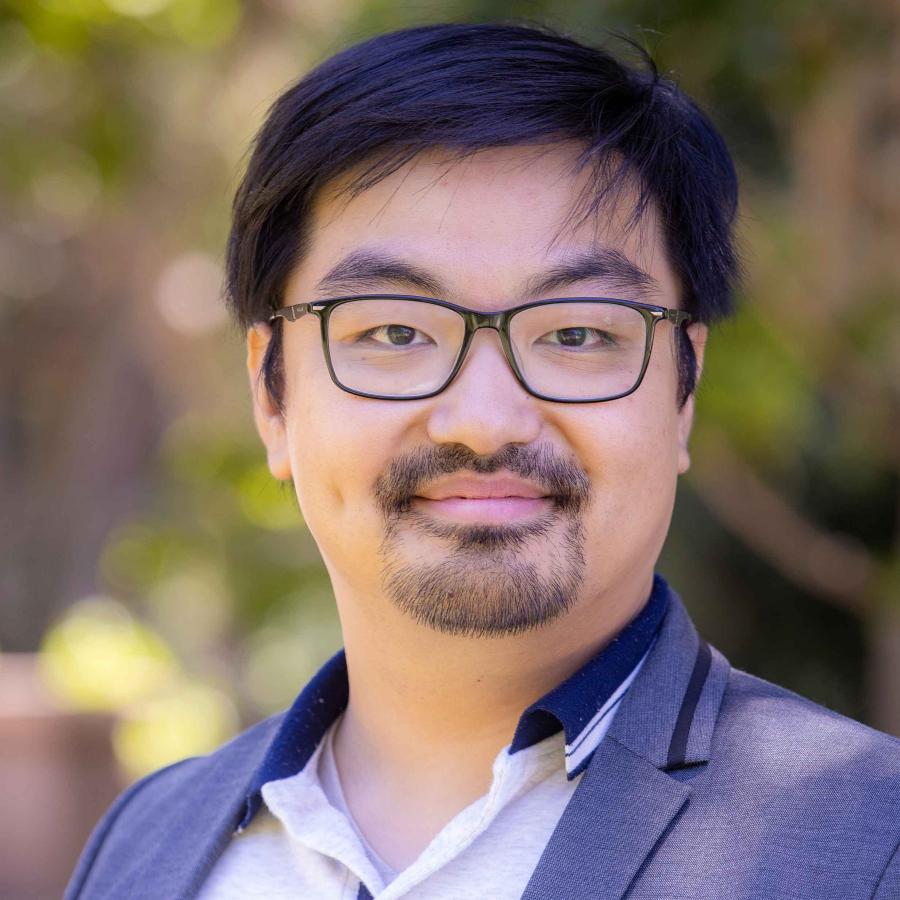
Sheard graduated from the University of Sioux Falls, earned a Master of Divinity at Fuller Theological Seminary and a doctorate in higher education leadership from Seattle University. He joined Westmont in 2008 to serve as the Vice President for College Advancement and CIO. During Reed’s tenure as leader of College Advancement, Westmont has conducted three capital campaigns, raising more than $500 million. eCampus named Westmont’s IT department one of the top 12 in higher education, and Computerworld/IDG has named Reed one of the top 100 IT leaders in the country. His current areas of study include Artificial Intelligence and building outstanding, productive teams. Click Here to Watch
Fall 2025:
Talk Examines America’s Long Affair with Tariffs
Alastair Su, Westmont assistant professor of history, speaks about “Tariff Nation: Talk Examines he Rise, Fall, and Return of America’s Most Contentious Tax” on Monday, Dec. 8, at 5:30 p.m. at the Community Arts Workshop, 631 Garden St., in downtown Santa Barbara. The Westmont Downtown Lecture is free and open to the public; no tickets or reservations required. Free parking is available on the streets surrounding CAW or in nearby city parking lots. For more information, please call (805) 565-6051.
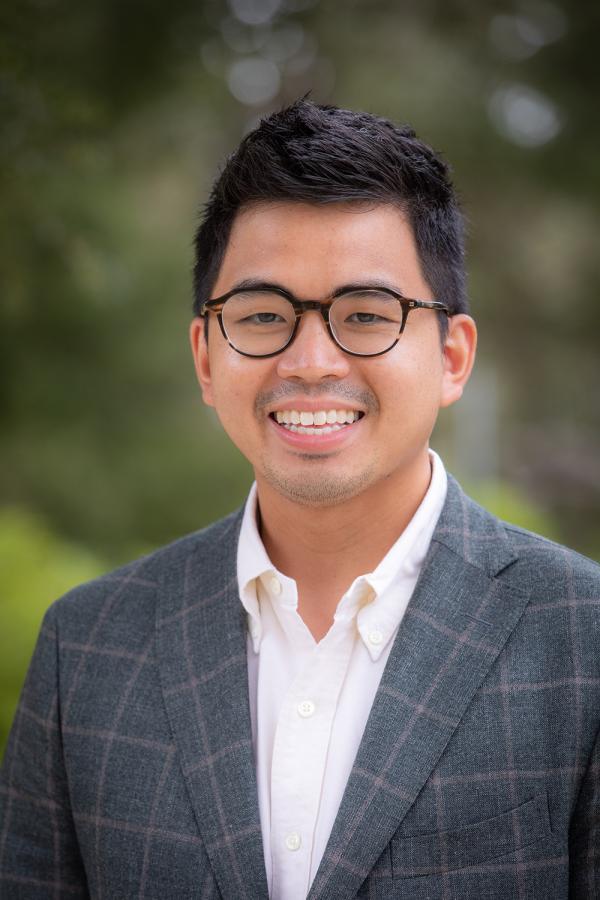
“Once dismissed as relics of the past, tariffs are back with a vengeance,” Su says. “My talk traces their rise, fall and return — and what their comeback says about America today.”
Su, who graduated from Harvard before earning a doctorate in history from Stanford University, will offer a 250-year overview of how the United States imposed tariffs, starting with Hamilton’s Reports of Manufactures, got rid of them in WWII before finding support for them again starting with Trump’s first administration.
He began teaching U.S. history at Westmont in 2021, and is completing his first book about America and the opium trade in the 19th century. He was awarded a 2025 Graves Award in the Humanities, which will support his work on his forthcoming book, “Flowering Gold: American Capital and the Opium War.”
The Westmont Foundation sponsors Westmont Downtown: Conversations About Things That Matter as well as the annual Westmont President’s Breakfast in late February.
Talk Explores Energy and Climate from the Ground Up
Ben Carlson, assistant professor of physics at Westmont, explores the scientific foundations of today’s most pressing energy and climate issues in a Westmont Downtown Lecture on Thursday, Oct. 9, at 5:30 p.m. at the Community Arts Workshop, 631 Garden St., in downtown Santa Barbara. The talk, “Energy and Climate Through the Lens of Basic Science,” is free and open to the public; no tickets or reservations required. Free parking is available on the streets surrounding CAW or in nearby city parking lots. For more information, please call (805) 565-6051.
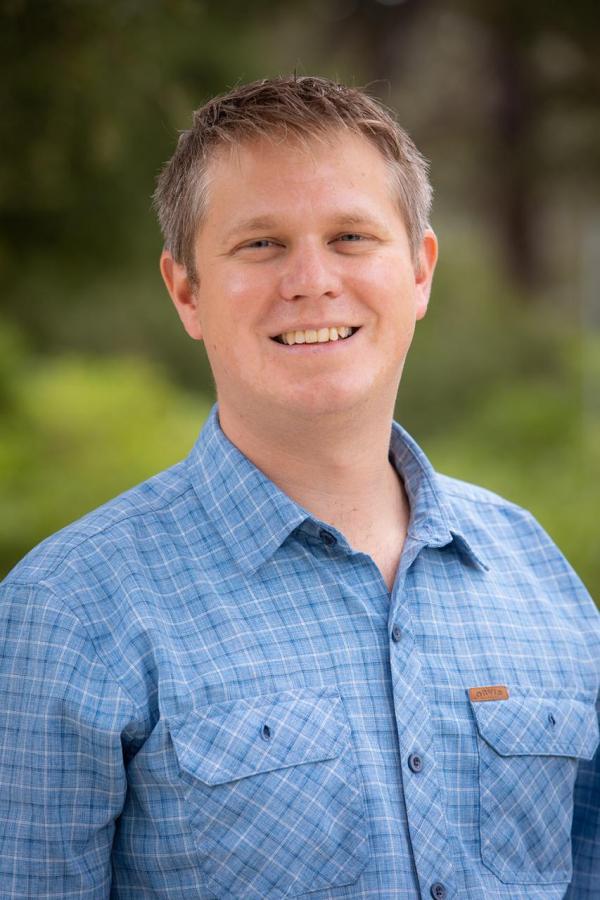
Carlson, who earned a doctorate from Carnegie Mellon University in Pittsburgh, says the lecture expands on a course, Physics for Future Presidents, that focuses on the impact of basic science on the modern world.
“I’ll highlight how the concept of energy density is a lens through which to examine energy — from batteries, to fossil fuels to nuclear power — and explore the challenges and opportunities of transitioning to sustainable energy systems,” he says.
Earlier this year, Carlson and thousands of researchers worldwide were honored with the 2025 Breakthrough Prize in Fundamental Physics, awarded to the ATLAS experiment at the Large Hadron Collider (LHC) at CERN, a particle physics laboratory in Geneva, Switzerland, as well as several related experiments.
In 2022, he received a $200,000 National Science Foundation grant to further his search for evidence of the presence of mysterious dark matter.
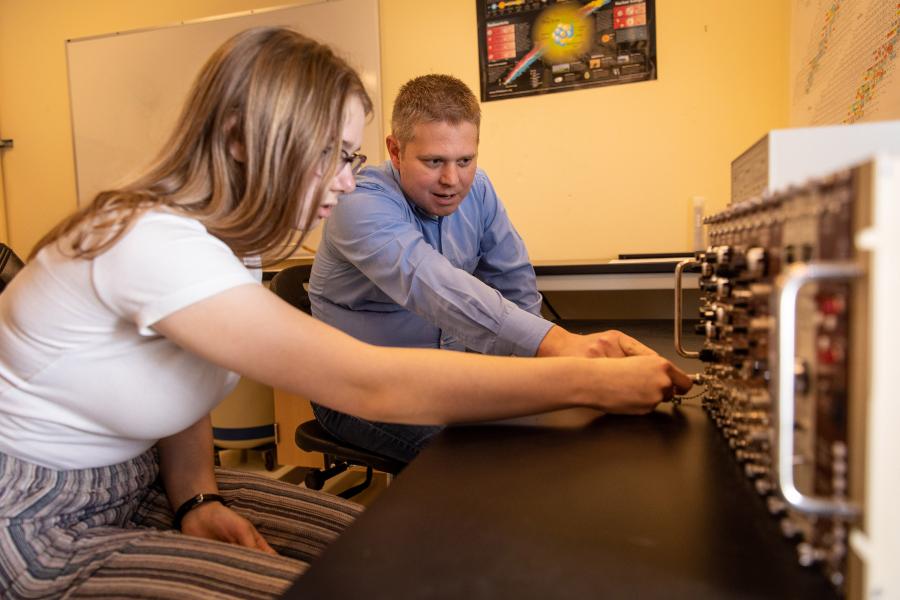
He joined the Westmont faculty in 2021 after teaching at the University of Pittsburgh as a Samuel Langley postdoctoral fellow.
The Westmont Foundation sponsors Westmont Downtown: Conversations About Things That Matter as well as the annual Westmont President’s Breakfast in late February.