Colleges of Distinction
|
The 2025-2026 Education College of Distinction award recognizes Westmont’s proven ability to graduate confident, compassionate and classroom-ready teachers. |
Alumni Stories
Hannah Krieshok ’18, English: “Teaching is the best thing I’ve ever done! At no other time in my life have I felt so fulfilled and happy. It’s an enormous challenge that is different every day, but I’ve had so many experiences that make it worthwhile a million times over. Getting to build relationships with students and hear all the hilarious and heartbreaking things they say has been such a wonderful journey, even in just one year.”
Allison Judy ’19, Chemistry: “The Westmont Teaching Credential program modeled differentiated and individualized instruction that aims to develop the whole person. I was able to receive professional and personal feedback in each stage of studentteaching. Best of all, I was given a lot of time in the classroom to actually practice my skills and build relationships with students and colleagues!”
Mandi Thomas ’20, Elementary: “Westmont’s Teaching program helped me notice the positives of my lessons, overcome difficult instructional challenges, grow in the areas I struggled with, and develop skills to teach in multiple ways, including online learning!”
Career Paths
The vast majority of program completers begin their career as an elementary or secondary classroom teacher. Others immediately pursue additional training to work in closely related careers such as special education or speech therapy. Long term, some program completers have gone into educational administration or teaching at the college level.
Faculty and Staff
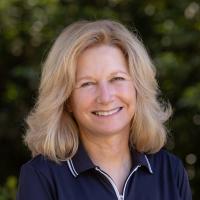
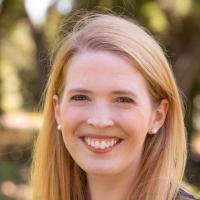
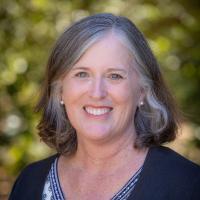
Passionate about math education and STEM accessibility

Each spring, Westmont welcomes over 100 local teachers and student teachers to campus to celebrate the impact that teachers make each day on students' lives.

Professor Jane Wilson and Veronica Gines ‘16 present at the annual Santa Barbara School District’s Leadership Mindset Conference.

Westmont's Education Department awards an annual Excellence in Education award to an outstanding educator.

Student teachers promote the teaching profession by connecting with students alternate years by visiting a local high school education academy or inviting high school students to campus for a "Let's Talk Teaching" conference.

Each fall the Education Department gathers public and private school teachers for a community gathering. Local teachers offer words of encouragement and inspiration to one another.

Professor Carolyn Mitten and credential candidates present Math and Literacy at a National Mathematics Learning Conference.
Westmont College Teacher Education Program graduates have excellent passage rates on the California Teacher's Exam!
Tracks and Requirements
Prior to your credential year take as many of the following requirements as possible, at Westmont or elsewhere.
- ED 100/101:Explorations in Teaching (4)
- ED 105: Perspectives on Cultural Diversity and Education (4)
- ED 160/161: Technology for the Classroom Teacher (2)
- ENG 106: Language Acquisition (4)
- KNS 156: Health for the Classroom Teacher (2)
If you desire to teach elementary school, begin by earning a college degree. At Westmont, the Liberal Studies major is a great choice as it helps you develop expertise in all subjects normally taught in the elementary classroom and prepares you for the CSET (subject-matter exams) required for entrance into a California Teacher Credential Program.
With careful planning and hard work, you may be able to complete both the Liberal Studies major and a Multiple Subject Teaching Credential in four years on our fast track plan.
Courses
Fall Semester (18 units)
- ED 110: Educational Psychology (4)
- ED 120: Social Studies and Science Instruction (4)
- ED 130: Special Education for the Classroom (2)
- ED 150: Math Instruction (4)
- ED 170: Reading and Language Arts Instruction (4)
Spring Semester (15 units)
- ED 190: Student Teaching (12)
- ED 195: Student Teaching Seminar —Elementary (3)
If you desire to teach junior high or high school, begin by earning a college degree in the subject you want to teach.
Westmont offers Single Subject Teaching Credentials in the following areas:
- Art
- English
- History/Social Science
- Mathematics
- Music
- Physical Education/Kinesiology
- Science (General, Biology, Chemistry, Physics)
- Spanish.
With careful planning, hard work, and counsel from your academic advisor and Education Department advisor, you may be able to complete both a BA degree and a Single Subject Teaching Credential in four years.
Courses:
Fall Semester (18 units)
- ED 101: Explorations in Teaching (4)
- ED 111: Educational Psychology (4)
- ED 130: Special Education (2)
- ED 171: Content Area Literacy (4)
One of the following:
- ED 122: English Curriculum and Instruction (4)
- ED 123: History/Social Science Curriculum and Instruction (4)
- ED 124: Mathematics Curriculum and Instruction (4)
- ED 125: Science Curriculum and Instruction
- ED 126: World Language (Spanish) Curriculum and Instruction (4)
- ED 127: Art Curriculum and Instruction (4)
- ED 128: Music Curriculum and Instruction (4)
- ED 129: Physical Education Curriculum and Instruction (4)
Spring (15 units)
- ED 191: Student Teaching (12)
- ED 196: Student Teaching Seminar —Secondary (3)
The Education Minor is for students majoring in disciplines outside of the Liberal Studies major (art, English, history/social science, physical education/kinesiology, mathematics, science—biology, chemistry, and physics—and Spanish) that are interested in K-12 education and/or are considering pursuing a teaching credential for junior high or high school. The Education Minor includes all of the prerequisite courses for Westmont's Credential Program. Please contact the Education Faculty for advising and next steps.
Minor Course Requirements (20-22 units)
- ED 100/101 Explorations in Teaching (4)
- ED 160/161 Technology in the Classroom (2)
- ED 105 Cultural Diversity (4)
- ENG 106 Language Acquisition (4)
- KNS 156 Health in the Classroom (2)
- ED 130 Special Education in the Classroom (2)
- Elective upper-division course approved by the Education Department Chair (2-4)
*It is important to note that a minor would not apply to Liberal Studies or Music Education Majors
This post-baccalaureate program requires prior completion of a B.A. or B.S.
A program advisor works closely with applicants through the admissions process and helps students complete the prerequisite courses/requirements.
Fast-Track
Secondary Education
Elementary candidates major in Liberal Studies. Working closely with a Liberal Studies advisor, students can complete a B.A. and earn a California Multiple Subject Preliminary Teaching Credential in four years.
Secondary candidates major in Art, English, History, Social Sciences, Physical Education/Kinesiology, Music, Mathematics, the Sciences (Biology, Chemistry, Physics) or Spanish. Working closely with a faculty advisor in their major and an education faculty advisor, students can complete a B.A. or B.S. and a California Single Subject Preliminary Teaching Credential in four years.

Marianne D’Emidio-Caston, who served the local education community for more than three decades, received the Westmont Education Department’s 2021-22 Excellence in Education Award.

Linda Ngo, one of the first recipients of the Young Life Urban Leadership Scholarship, graduated from Westmont as the top student in liberal studies for 2021.

Westmont’s Education Department honored its eight elementary and three secondary student teachers, who all earned California Preliminary Credentials, at the Celebration of Teaching event April 26 on campus.

In a new tradition, students in the teaching credential program spend a weekend in Yosemite before the fall semester starts.

Allison Judy ’19 discovered that Westmont prepared her in more than one way to become a teacher. “The faith-filled teachings and relationships with friends and teachers cultivated the compassion and perspective necessary for approaching teaching from the heart,” she says.

During the pandemic, nine Westmont student teachers used their creativity during this unique and challenging season while learning to teach. Placed in four schools in the Santa Barbara Unified and Hope School Districts, the students took credential courses at Westmont, both online and in person, while collaborating with their cooperating teachers in a remote K-12 classroom.

Anna Luce '22, a liberal studies major who values culture and language, hopes to incorporate both into her future teaching career.
Linda Ngo, one of the first recipients of the Young Life Urban Leadership Scholarship, graduated from Westmont as the top student in liberal studies for 2021.

Marianne D’Emidio-Caston, who served the local education community for more than three decades, received the Westmont Education Department’s 2021-22 Excellence in Education Award.
Westmont’s Education Department honored its eight elementary and three secondary student teachers, who all earned California Preliminary Credentials, at the Celebration of Teaching event April 26 on campus.
Scholarships
Students may apply for financial aid. Important information for applying for financial aid is available on the Financial Aid page. Students may be eligible for additional scholarships from the Credential Program. During the Spring Semester of the credential year, candidates holding a BA or BS, who live off campus, are eligible for a scholarship equal to 55% of tuition.
The teaching credential application opens on December 15. Applications are due on February 1.
Program Costs
The Teaching Credential Program Tuition for 2026-2027
| FALL SEMESTER | SPRING SEMESTER | TOTAL 2026-2027 | |
| Tuition | $28,315 | $28,315 | $56,630 |
| Health Fee | $314 | $314 | $628 |
| Student Activity Fee | $181 | $181 | $362 |
| Technology Fee | $170 | $170 | $340 |
| TOTAL DIRECT COSTS (BILLED BY WESTMONT) | $28,980 | $28,980 | $57,960 |
FAQs
Being a Music Education major in college, I became naturally connected with the Education Department through the required courses for my major. However, I really became connected with the Education Department when I did an independent study internship course my senior year of college. Since I did my pre-professional fieldwork while I was studying abroad in Vienna, Austria, the Education Department recommended that I also do some fieldwork in Santa Barbara when I returned from my abroad semester, so I could gain some experience and connections in Santa Barbara schools. The Education Department helped to place me in a local music classroom with an expert music teacher who is still a cherished mentor, even now that I have begun my career in my own classroom.Since I was a double major in college and spent a semester abroad, the Education Mayterm courses were very helpful for me to fulfill the Education courses in my degree program. The Education Department also helped me to navigate my course requirements upon entry into the credential program and I was able to fulfil the remaining prerequisite requirements during the first semester of the credential program.
I loved the community of the Westmont Credential program. I was able to form deep and lasting relationships with my peers and professors, as well as our cooperating teachers. The Westmont professors were able to spend a lot of time in each of our classrooms and help to guide our development as teachers.
I LOVE teaching Elementary School Music. For many students, elementary school music class is their introduction to music. Whether it be singing together, learning to play an instrument, or introducing students to music they may not be familiar with, music class is such a magical place of learning and connection. I love bringing fun to learning and helping students to experience the joy of creating music together.
The short answer—generally speaking—is yes.
Many states have what are called reciprocity agreements that establish mutual recognition of the licenses and teacher training acquired outside the teaching candidate’s home state. Traditionally, California has been among the states with the highest number of reciprocity agreements. In other words, a teaching credential from California is widely recognized elsewhere. Whether or not your state has a specific reciprocity agreement with California, you will in all likelihood be allowed to teach back home for a fixed length of time under some sort of provisional license granted by that state on the basis of the preliminary California credential you earned through Westmont. Then once you have a job, you work with the teacher certification office in your home state toward a full credential.
If you know now that you want to teach in a particular state, it may be helpful to contact the specific office of teacher certification for current requirements—see Useful Links on the Department’s web page. Remember, however, that state requirements are often in a state of re-negotiation, and it may not be possible to know exactly where you stand in another state until you have your credential from California in hand.
In many cases, yes. Students who enter college with an unusually strong academic background, who plan carefully from the start, and who are willing to take summer classes may be able to participate in a wide variety of programs—potentially including the Europe semester.
It depends partly, of course, on what specific off-campus program you are considering. A program at a sister liberal arts college where you are able to take classes parallel to those required at Westmont will be more feasible for a broader range of students than a less traditional off-campus program.
Bear in mind that Westmont offers a number of exciting off-campus and international programs during the summer months—programs that are less apt to complicate your schedule than those offered during the academic year. Students who are unable to participate in the Europe semester often enroll in Westmont’s Europe Mayterm.
Non-Discrimination Policy
Westmont's credential program aligns with the institutional Non-Discrimination Policy shown on the institutional webpage.
Alumni Receive Awards
Christina Pena Eckert ’17 received the 2021 Distinguished New Educator Award in Santa Barbara County and was honored at Santa Barbara's Salute to Teachers event in November 2021. Christina teaches Spanish and AVID at Carpinteria Middle School.
Emily Hagen ’14 received the 2017 Support Employee of the Year for her work as an Intervention Specialist at Theodore Judah Elementary School.
Katie Curry ’13 received the 2014 Santa Barbara County Young Educator of the Year award.
Ema Diaz Edrington ‘12 received the 2015 Carpinteria Educator of the Year for her work at an alternative high school.
Alana Woodin '10 received Orange Cove's Community 2017 Educator of the Year Award, Westmont Education Department's 2018 Excellence in Education Award, and Westmont's 2018 Young Alumni of the Year for her work with AVID students.
Kendra Yancey '10 received the 2018 Capistrano Valley High School "Teachers are Heroes" award.
Mike Lynch '09 is a Dos Pueblos High School science teacher, was honored at Westmont's 85th Anniversary Gala in October 2022. Mike was honored as an outstanding alumnae for his contributions to education.