Backpack a volcano in Cotapaxi National Park! SCUBA dive and hike in the Galapagos Islands! Explore waterfalls in the Amazon rain forest! Tour the world famous Charles Darwin Research Station!
Ecuador and the Galapagos Islands contain some of the most biodiverse regions in the world, including cloud forests, steamy jungles, mountainous highlands, and epic marine reserves. This program, led by Drs. Blake Kent (sociology) and Tim VanHaitsma (kinesiology), will explore all these regions while examining human/environment interaction at the individual and structural levels. Applications are due October 16, 2026.
Choose from Environmental Sociology (4 credits) or Environmental Physiology (4 credits), along with a core course in Cross-Cultural Communication (2 credits). Also offered is a choice between two PE courses: Trail Hiking or SCUBA Diving, plus an opportunity for Serving Society GE credit. This is an exceptional opportunity to explore one of the most stunning natural spaces in the world, including what is arguably the most famous archipelago on earth - the Galapagos! Our home base is a retreat center in the mountains outside of the capital city of Quito. Local staff will provide exceptional knowledge as we participate in trips to various towns, villages, churches, forests, and national parks. We will not just be "tourists" - this program offers the chance to serve alongside and learn from indigenous and local leaders. The program offers the ability to earn up to 7 credits, including several GE's (Understanding Society, Life Sciences, PE, and Serving Society).
- Students from any major are welcome to apply.
- Sociology, Kinesiology, and Environmental Studies students receive major credit.
- Students outside these programs earn outside-the-major credit and can fulfill a number of GE requirements.
- It is possible to combine this program with a 2 unit tutorial Spring ‘27, allowing student to gain 8 units (out of 20) towards a sociology minor.
- The program will be somewhat physically demanding, including living at high altitude (9,500 feet) and hiking at elevation (up to 13,000 feet).
- Students with a history of hypoxia, asthma, lung injury, altitude sickness, or any other relevant limitation should consult with a doctor.
Environmental Sociology (SOC-161, 4 credits, Understanding Society GE) examines the nexus of society and nature. Environmental sociologists have developed sophisticated theoretical and empirical work to examine how society affects nature and how nature affects society. The course examines topics such as environmental problems, theory, consumption, justice, and technology. It will be tailored to include a focus on Ecuador with topics such as conflict over oil, local and national conservation efforts, indigenous rights, and more.
Environmental Physiology (KNS-150, 4 credits, Life Sciences GE) will examine how the body is affected by various environmental factors such as altitude (hypoxia), heat (global warming), cold, hyperoxia (SCUBA), pollution, microgravity (space), and will include discussion of gender differences that may exist within each of these topics. It will utilize the Ecuadorian context to illustrate and apply content as students explore 13,000 foot mountain highlands, Amazonian jungle, and offshore islands.
Cross-cultural Communication (SOC/AN-150, 2 credits) will use both classroom material and the Ecuadorian context to examine effective cross-cultural communication. From early missionary contact in the Amazonian jungle to Ecuador as a US retirement hot spot, Ecuador itself has a rich--and complicated--history of cross-cultural engagement. Co-taught by Robbie Watson, an expat who lived a number of years in Quito.
SCUBA Diving (PEA-014, 1 credit, Physical Education GE) is a premiere opportunity to earn your PADI Open Water dive certification in one of the most sought after dive destinations in the world: the Galapagos Islands (additional course fee required).
Trail Hiking (PEA-067, 1 credit, Physical Education GE) takes advantage of our itinerary to learn the ropes of trail hiking in a diverse array of environments, from our 300 acre "home base" retreat center to Quilotoa volcano to the Amazon jungle to the Galapagos Islands.
Serving Society (APP-191, 0 credits, Serving Society GE). Our "home base" partners in Calacali have extensive experience facilitating on-site and local service opportunities. Students will participate in several community engagement and service projects during their three weeks in Calacali.
Approximately $7,885 (includes tuition, room, board, and all domestic travel. Does not include RT airfare or additional $300 fee for optional SCUBA course).


Meet the Team
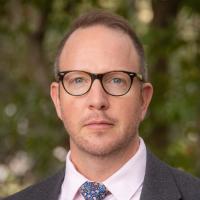
Dr. Kent is a sociologist specializing in social epidemiology. The courses he teaches focus on environment, health, quantitative methods (and scuba!). He also holds a master’s degree in applied theology and has traveled to or lived in over 25 countries.
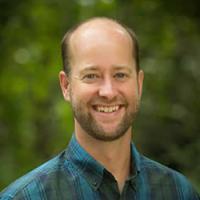
Dr. VanHaitsma is a kinesiologist whose expertise includes human physiology, exercise physiology, human performance, and clinical exercise physiology. He studies exercise-induced fatigue, chronic fatigue syndrome, and how the mind affects human performance. He is also an avid trail runner.